- contact@insightkycai.com
Use cases
Real KYC situations, worked end to end
Each one on the demo bank’s data, a fictional bank with invented customers and lists, showing what the agents prepare and what the analyst decides.
Worked end to end
Eight situations every KYC team meets
Each is a real case on the demo bank’s data, with the screens and a step-by-step account of who does what.
Onboarding · business
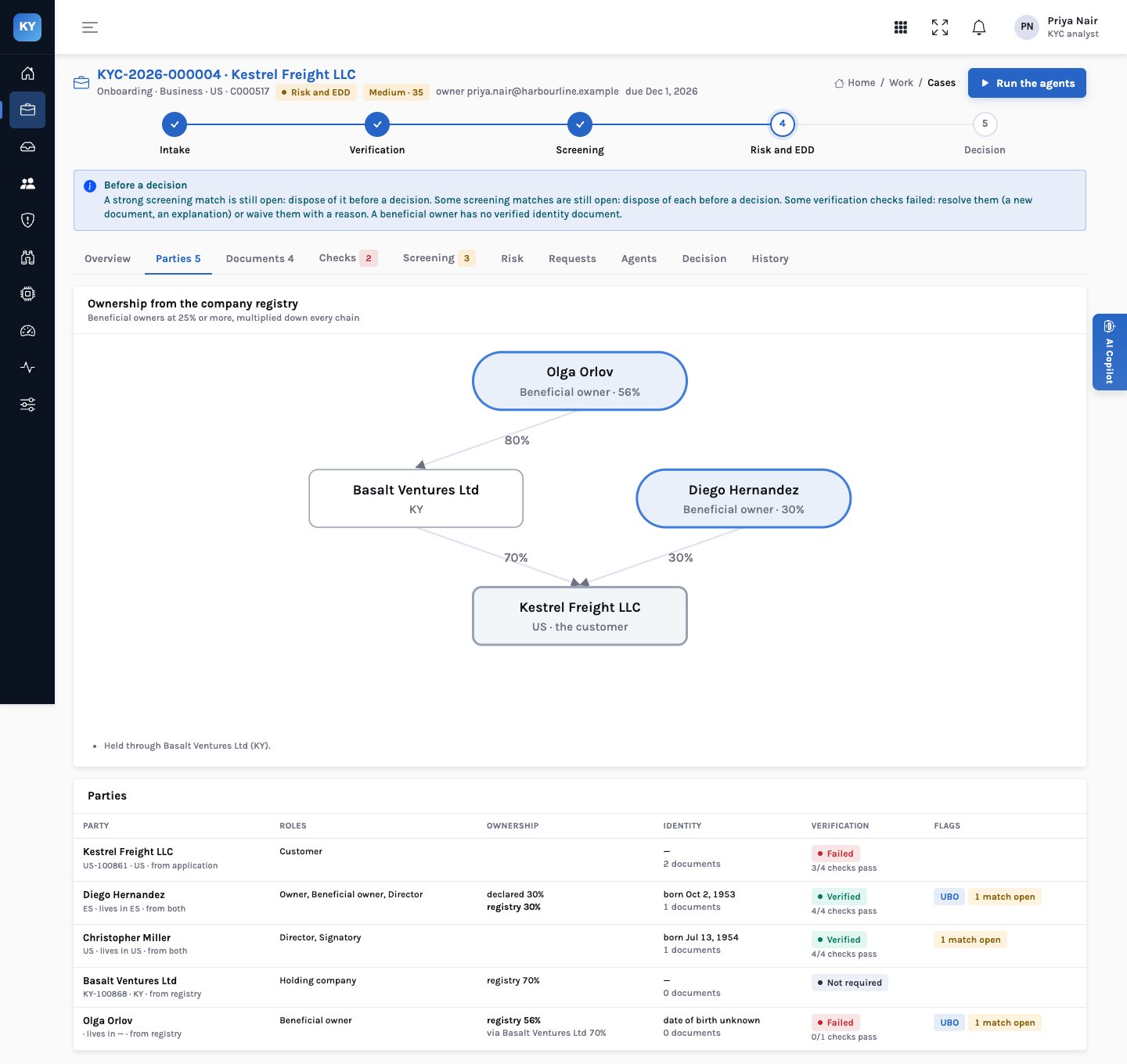
The owner the application didn’t name
A freight company declares one owner at 30%. The registry shows a Cayman holding company with 70%, and a person behind it at 56% effective.
- Registry walked down every chain
- Undisclosed owner raised as a failed check
- Request drafted for her passport and the register
Onboarding · individual
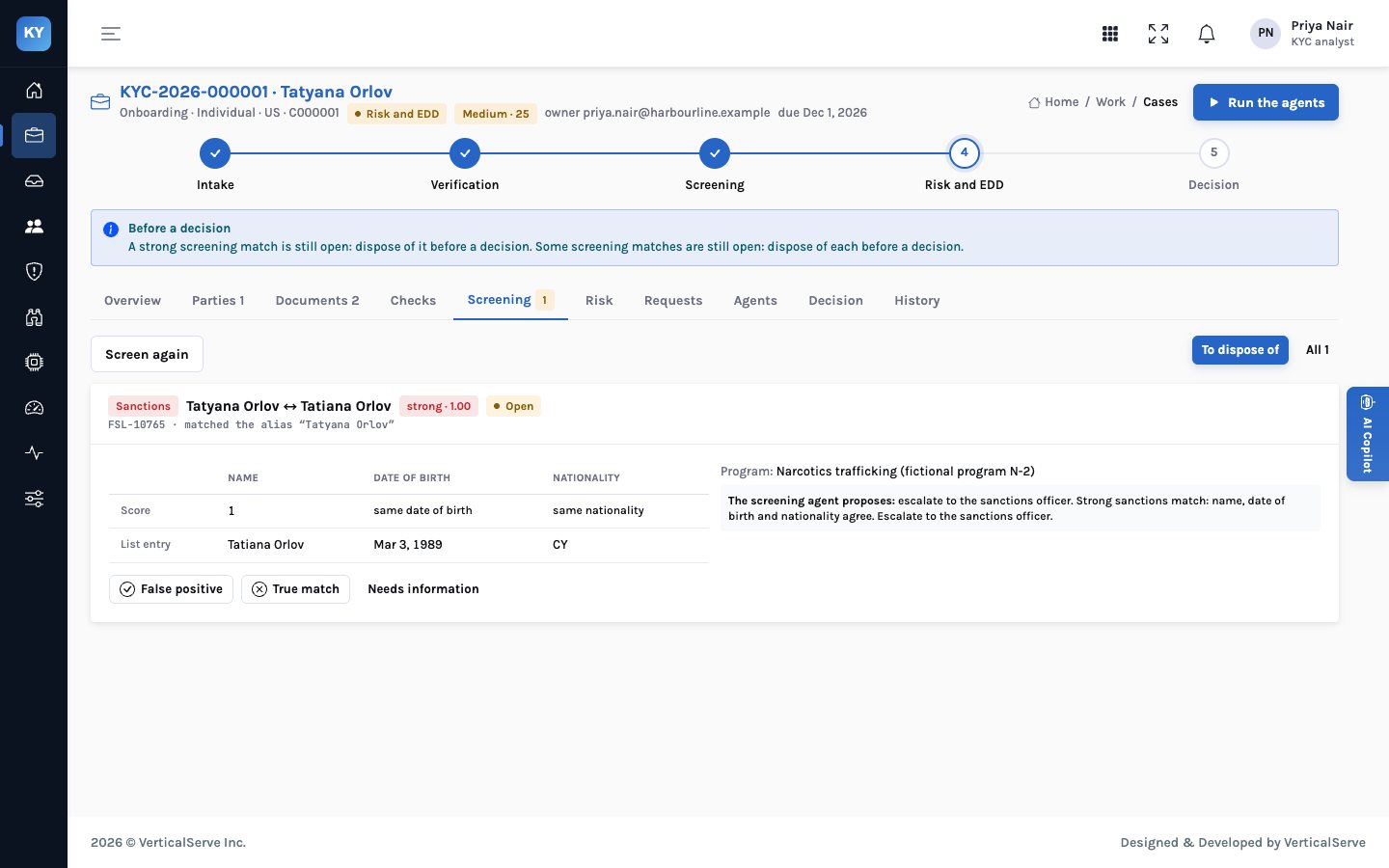
Nine matches, one of them real
Nine entries on the list look like a new customer. Eight have a different surname and never reach the analyst. One agrees on name, date of birth and nationality.
- The match explained side by side
- Agent proposes; a person disposes
- A confirmed match blocks the decision
Onboarding · PEP
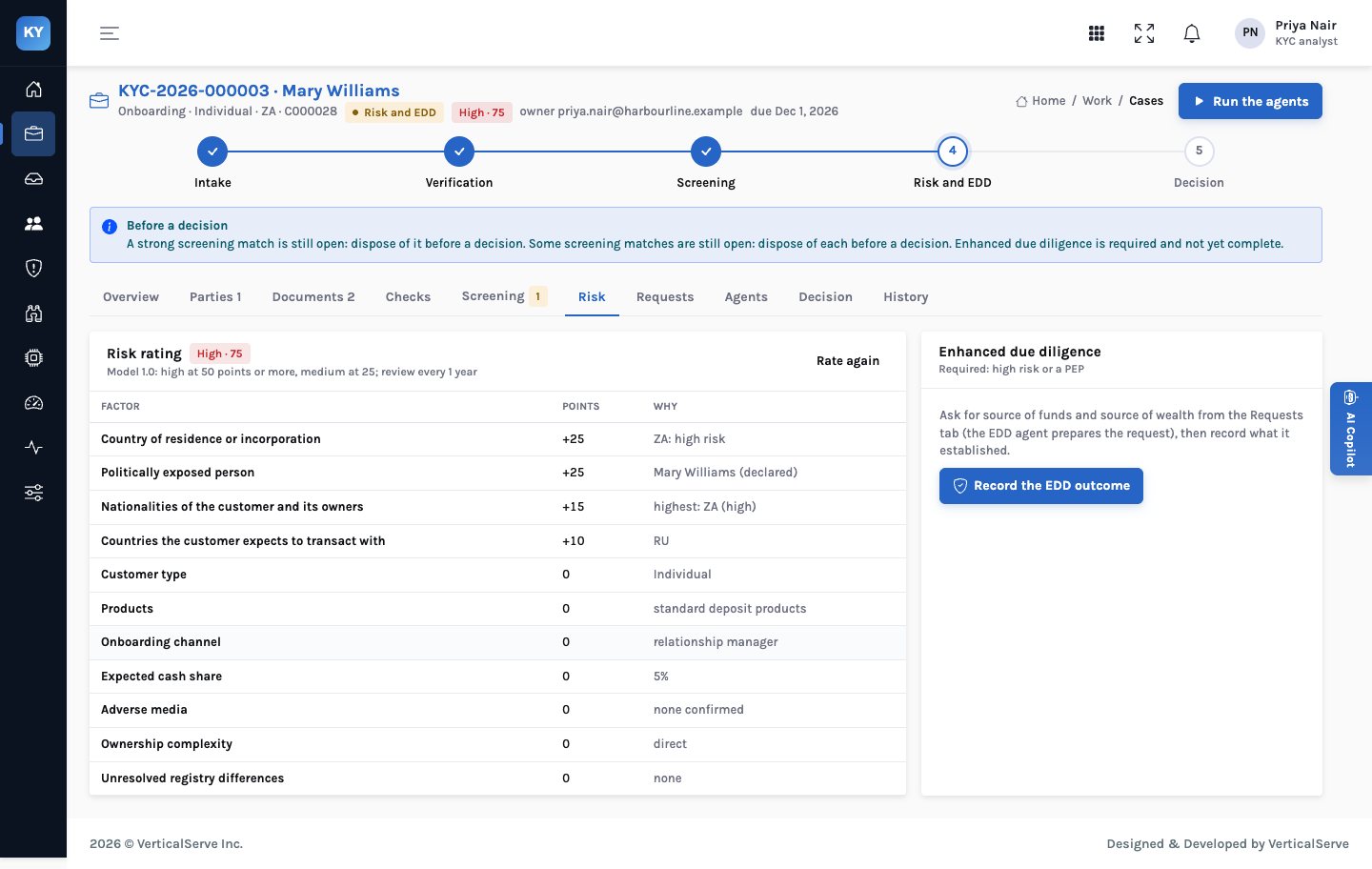
Onboarding a politically exposed person
A declared PEP living in a high-risk country. Rated high at 75 points, with enhanced due diligence and a second approver.
- Source of funds and wealth requested
- EDD recorded on the case
- Submitted by the analyst, approved by a lead
Onboarding · documents
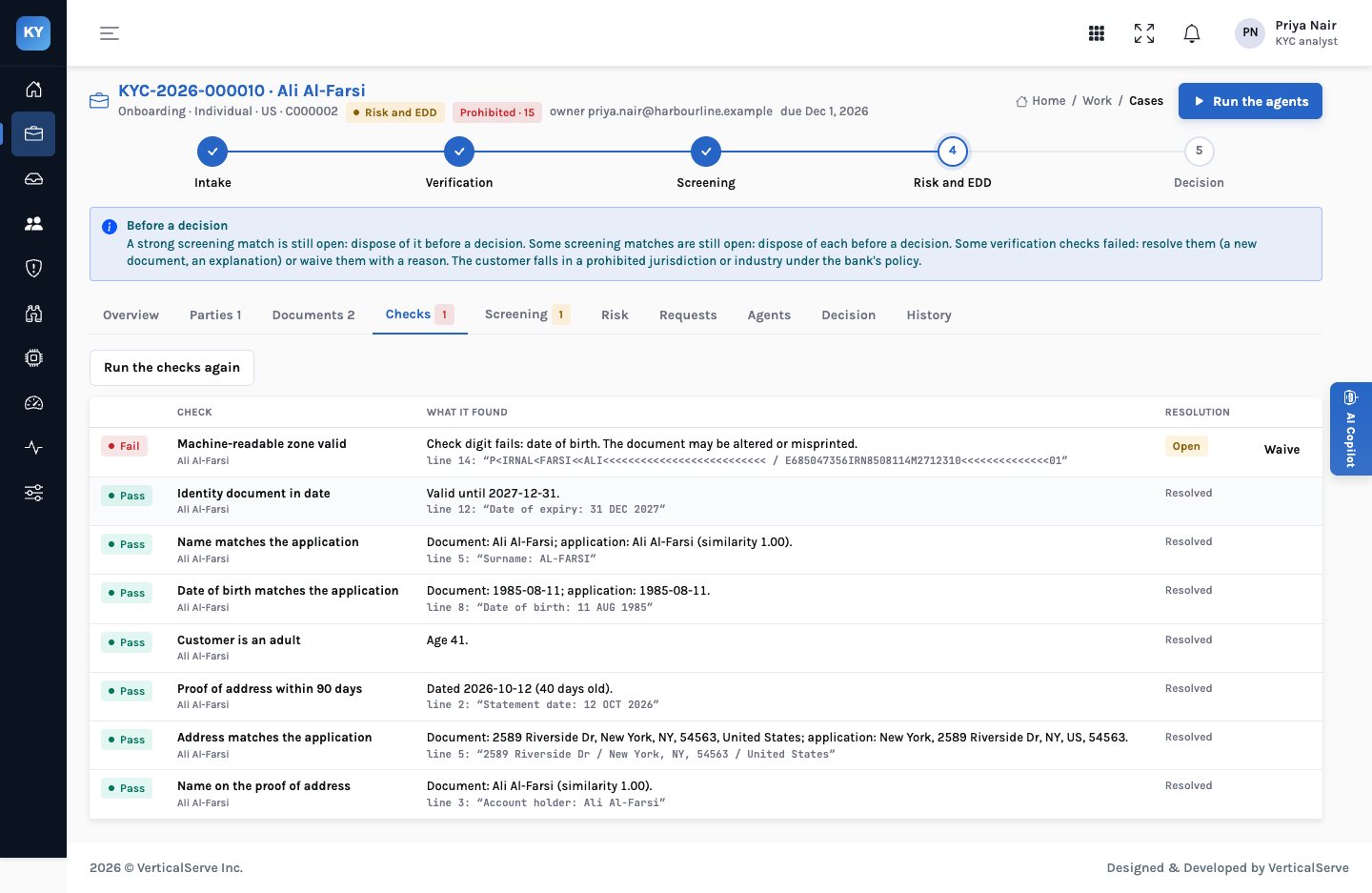
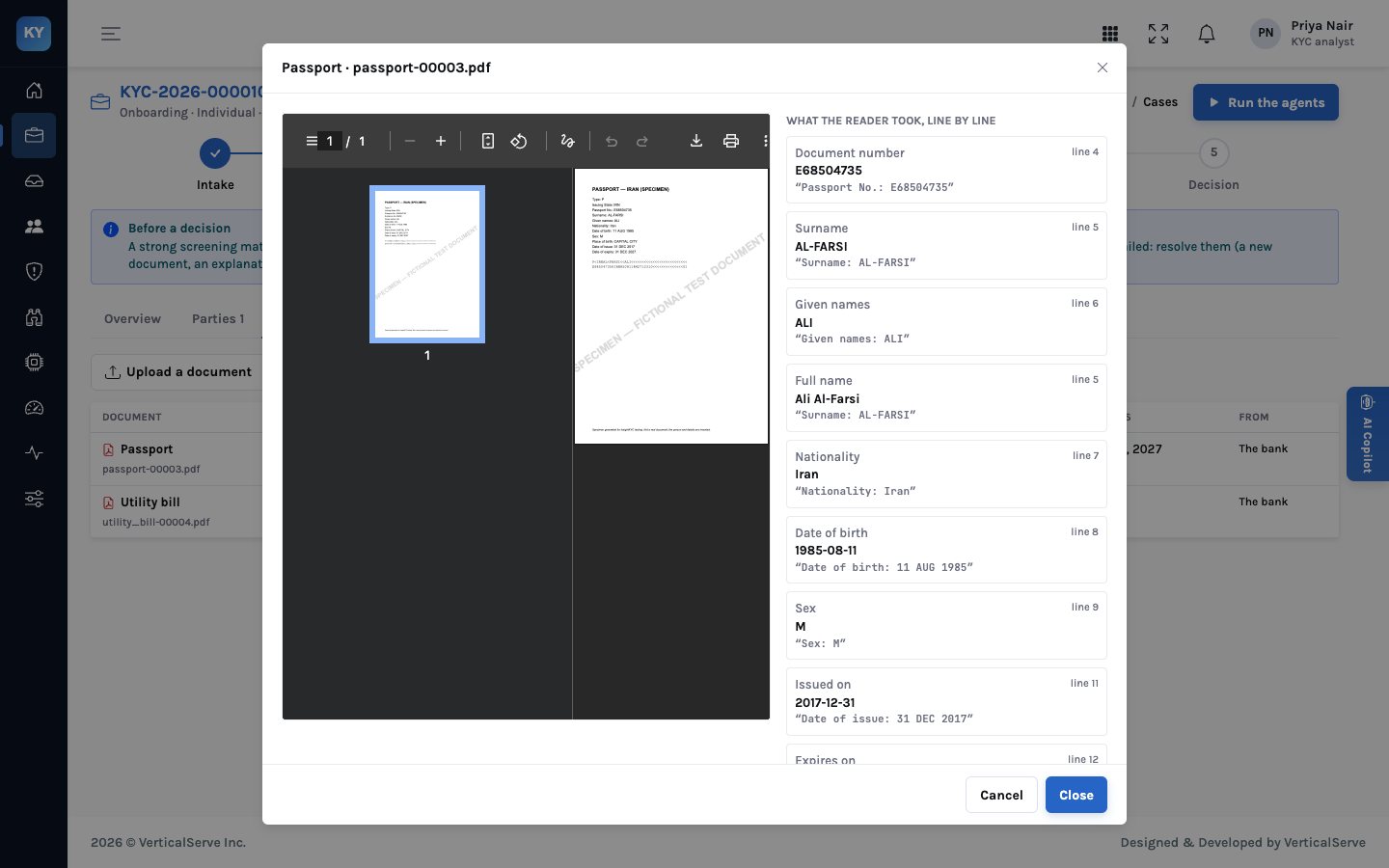
The passport whose numbers didn’t add up
Every check passes except one: the date-of-birth check digit in the passport’s machine-readable zone.
- ICAO 9303 check digits recalculated
- The failing line quoted
- Resolved with a new document, not a guess
Onboarding · documents
The driver’s licence that expired last month
A routine individual onboarding where the identity document expired weeks before the case.
- Expiry read and quoted
- Request for a current ID
- Checks re-run when it arrives
Monitoring · event-driven review
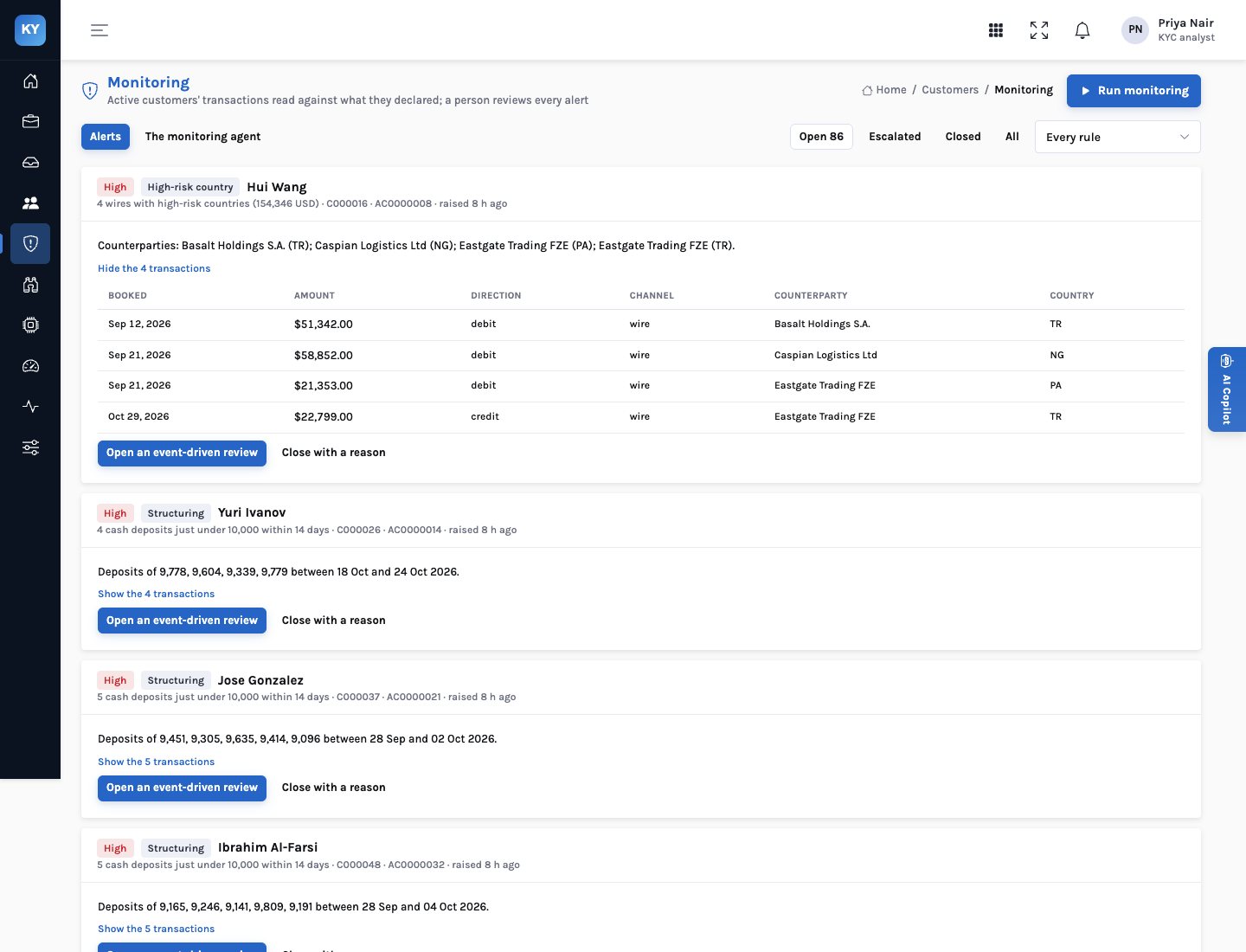
Five deposits just under ten thousand
Cash deposits each just under the reporting threshold within fourteen days, read against what the customer declared.
- Alert with its transactions
- Close with a reason, or
- open an event-driven review
Customer book · periodic review
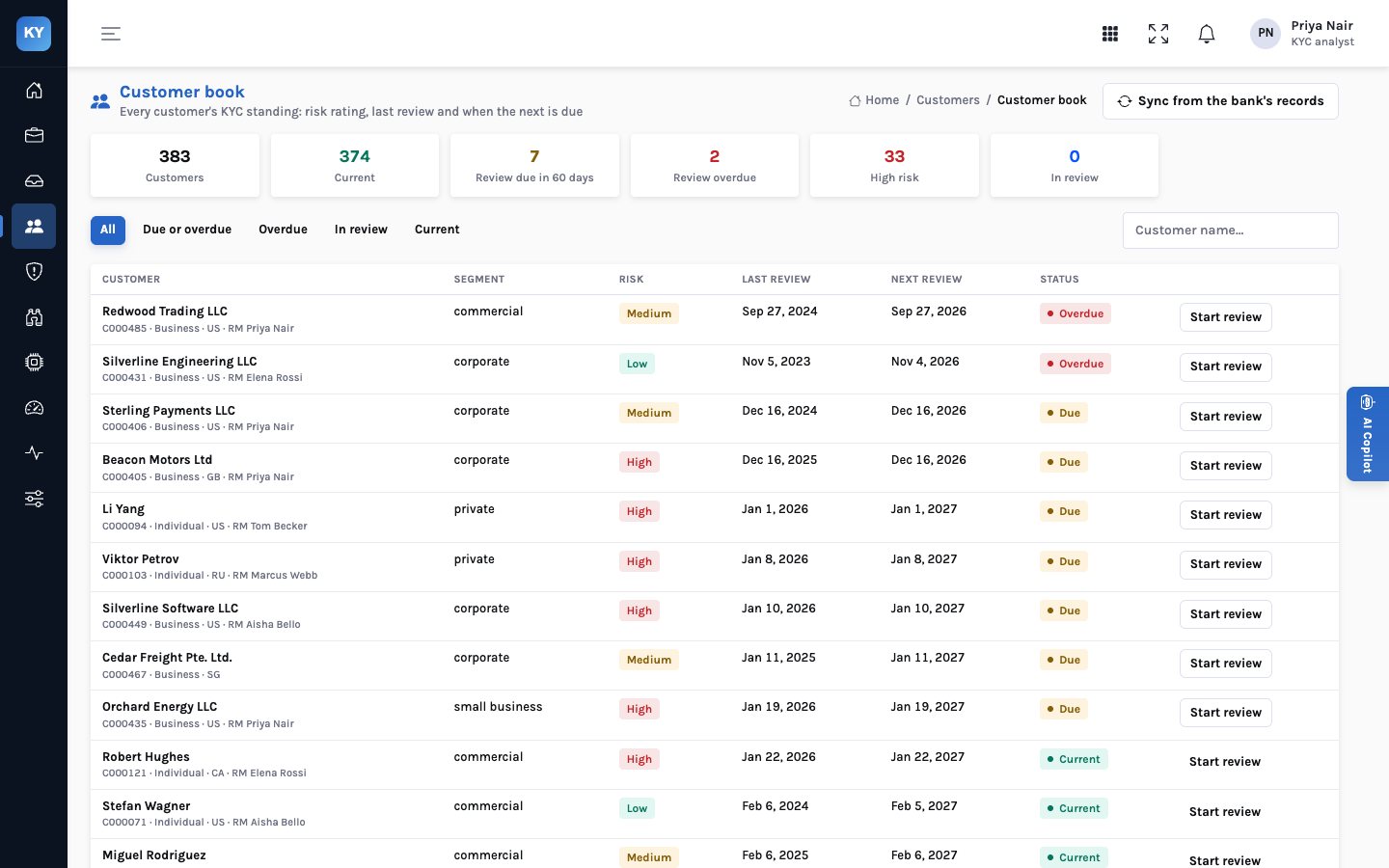
Periodic review that follows the risk
Reviews scheduled by each customer’s rating, with the due and overdue ones one step from a case.
- Next review set from the rating
- Due and overdue at a glance
- Start review opens the case
Requests · customer
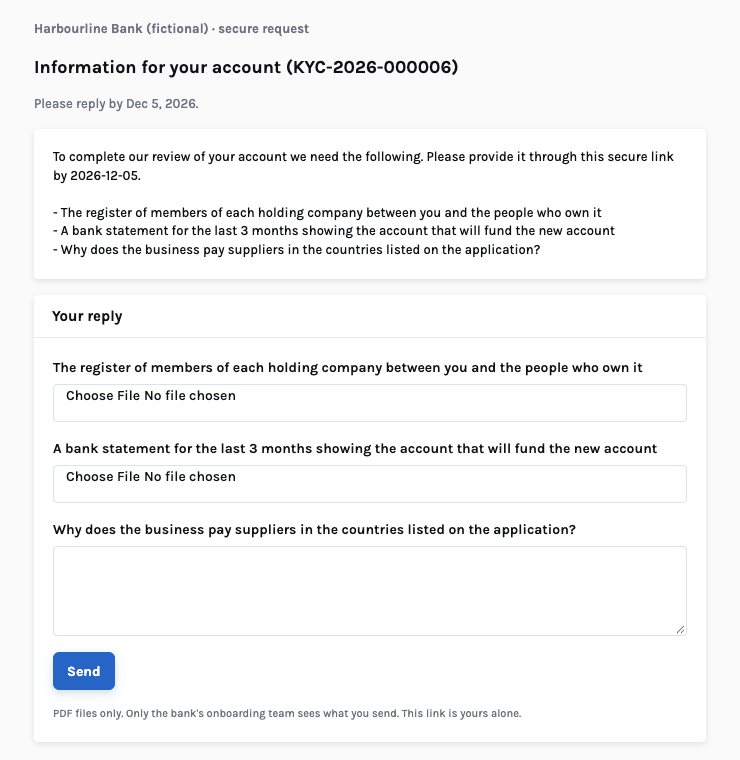
Asking the customer, and getting an answer
An agent drafts the request, an analyst sends it, the customer answers through a link, and the checks re-run.
- Held until a person sends it
- A no-login link, shown once
- Uploads read on arrival
Three ways a case starts
Onboarding, periodic review and event-driven review
The same stages and the same controls, whatever opened the case.
| Trigger | Case type | What the agents prepare | What a person decides |
|---|---|---|---|
| An application arrives | Onboarding | Documents read, checks, owners, screening, rating, requests, memo | Dispositions, waivers, what to send, approve or decline |
| A review falls due in the book | Periodic review | The same, on the customer’s current data | Whether the relationship continues, and the next review date |
| Monitoring raises an alert | Event-driven review | The alert’s transactions against the declared profile | Close with a reason, or review the customer |
Who does what
Agents prepare. These people decide.
Roles map to the identity service: analysts, leads, administrators and auditors.
KYC analyst
Prepares and submits
Works the queue, reviews what the agents prepared, disposes of matches with reasons, sends requests, records EDD and submits high-risk cases.
KYC lead
Approves and overrides
Approves what someone else submitted, overrides a rating with a reason, waives a check, and sets how much the agents may do.
CCO or MLRO
Owns the policy
Sets the risk model and the case controls in Rules Studio, and reads the decision record and the agents’ agreement rates.
Auditor
Reads everything
Sees every case, document, disposition and decision record, and changes nothing.